The Kalindi Khal Trek is one of the most demanding and adventurous high-altitude expeditions in the Indian Himalayas, connecting the sacred towns of Gangotri and Badrinath. Crossing the formidable Kalindi Khal Pass at an altitude of around 5,950 meters, this trek is less of a traditional trail and more of a true mountaineering-style traverse through some of the wildest landscapes of the Garhwal region. Unlike regular treks, the route involves navigating glaciers, moraine fields, crevassed snow slopes, and rocky terrain, often requiring the use of ropes, crampons, and ice axes. The journey begins in the Bhagirathi Valley and gradually transitions into the Alaknanda Valley, offering a rare opportunity to witness two major Himalayan river systems in a single expedition.
Expedition-Style Trek: One of the toughest high-altitude traverses in India, meant for seasoned trekkers with prior experience
Extreme Altitude Challenge: Crosses ~5,950 m at Kalindi Khal Pass, pushing physical and mental limits
Legendary Route: Connects the sacred regions of Gangotri to Badrinath, blending adventure with spirituality
Diverse & Harsh Terrain: Navigate glaciers, moraines, boulder fields, steep scree slopes, and crevassed snowfields
Technical Expedition: Requires use of ropes, ice axes, crampons, and expert mountaineering skills
High Glacier Traverses: Walk across vast glaciers like Gangotri, Chaturangi, and Kalindi—rare in most Indian treks
Panoramic Himalayan Views:
- Shivling Peak (6,543 m)
- Meru Peak (6,630 m)
- Kedar Dome (6,808 m)
- Bhagirathi Peaks (6,856 m)
- Nilkantha Peak (6,506 m)
- Kamet (7,756 m)
Remote & Untouched Wilderness: One of the least crowded and most isolated trekking routes in the Himalayas
Extreme Weather Conditions: Experience sub-zero temperatures, high winds, and rapidly changing mountain weather
Camping on Glaciers: Unique campsites on ice and snowfields, offering a true expedition feel
High-Risk, High-Reward Journey: Demands endurance, but rewards with unmatched Himalayan raw beauty
Spiritual Significance: Begins near Gangotri (source of Ganga) and ends at Badrinath, adding a sacred dimension
Team-Based Expedition: Requires coordination with experienced guides, porters, and technical support teams
Not for Beginners: Strictly recommended for trekkers with prior high-altitude and technical trekking experience
True Himalayan Expedition Experience: A rare combination of adventure, isolation, spirituality, and extreme terrain
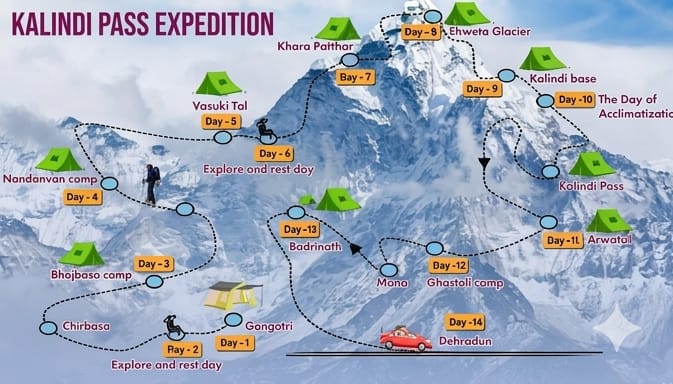
Day 1: Arrival in Gangotri (3,100 m), acclimatization
Day 2: Trek to Bhojbasa (3,800 m)
Day 3: Bhojbasa to Gaumukh – Tapovan (4,300 m)
Day 4: Acclimatization at Tapovan
Day 5: Tapovan to Nandanvan (4,500 m)
Day 6: Nandanvan to Vasuki Tal (4,800 m)
Day 7: Vasuki Tal to Khara Pathar (5,000 m)
Day 8: Khara Pathar to Sweta Glacier Camp
Day 9: Cross Kalindi Khal Pass (~5,950 m), descend to Raj Parav
Day 10: Raj Parav to Arwa Tal
Day 11: Arwa Tal to Ghastoli
Day 12: Ghastoli to Badrinath (3,300 m)
Day 13: Departure
Day 1: Arrival in Gangotri (3,100 m)
Gangotri
- Drive from Rishikesh/Uttarkashi to Gangotri
- Check-in, gear inspection, and briefing
- Visit Gangotri Temple (optional)
- Stay: Guesthouse / Camp
Day 2: Gangotri → Chirbasa → Bhojbasa (3,800 m)
- Trek Distance: ~14 km
- Trail follows the Bhagirathi River
- Pass through pine forests and landslide zones
- Reach Bhojbasa campsite
- Stay: Camp
Day 3: Bhojbasa → Gaumukh → Tapovan (4,300 m)
Gaumukh Glacier
- Trek Distance: ~8 km
- Reach Gaumukh (source of Ganga)
- Steep climb to Tapovan
- Stunning views of Shivling Peak
- Stay: Camp
Day 4: Acclimatization at Tapovan
- Short hikes and rest
- Glacier exploration and training session (basic techniques)
- Stay: Camp
By Air:
Nearest airport – Jolly Grant Airport (~250 km from Gangotri)
By Rail:
Nearest railway station – Rishikesh Railway Station
By Road:
- Drive from Dehradun / Rishikesh to Gangotri
- Well-connected via Uttarkashi
Booking and Payment:
- Booking Confirmation:
- Confirmation of the booking is subject to the availability of slots and resources.
- Payment Schedule:
- A non-refundable deposit is required at the time of booking to secure the spot.
- Full payment must be received before the commencement of the trek.
- Payment Methods:
- Accepted payment methods, including bank transfers, credit/debit cards,UPI, and any other specified means.
Cancellation and Refund Policy:
- Cancellation by Traveler:
- Cancellation requests must be made in writing.
- The deposit is non-refundable.
- Cancellation charges increase as the departure date approaches.
- Cancellation by the Travel Company:
- The travel company reserves the right to cancel or alter the trip due to unforeseen circumstances. In such cases, a suitable alternative or a refund will be provided.
Trek Itinerary and Inclusions:
- Itinerary Changes:
- The itinerary is subject to change based on weather conditions, unforeseen events, or any other circumstances beyond the company’s control.
- Inclusions:
- Clearly outline what is included in the trek package, such as accommodation, meals, transportation, trekking permits, guide services, camping equipment, and more.
Health and Fitness:
- Physical Fitness:
- Acknowledge that trekking involves physical exertion and travelers should be in good health.
- It is the responsibility of the traveler to inform the company of any medical conditions or concerns.
- Altitude Sickness:
- Highlight the risk of altitude sickness and the importance of acclimatization during the trek.
Travel Insurance:
- Mandatory Insurance:
- It is mandatory for all travelers to have comprehensive travel insurance covering medical emergencies, trip cancellations, and other unforeseen events.
Equipment and Gear:
- Personal Equipment:
- Provide a list of recommended personal trekking gear and equipment that travelers need to bring.
- Rental Services:
- Specify if the company provides equipment rental services and associated costs.
Code of Conduct:
- Responsible Trekking:
- Emphasize responsible trekking practices, including leaving no trace, respecting local cultures, and following the Leave No Trace principles.
Force Majeure:
- Unforeseen Events:
- Clarify the company’s stance in case of unforeseen events such as natural disasters, political unrest, or any circumstances beyond control.
Miscellaneous:
- Travel Documents:
- Travelers must possess valid identification and any necessary permits throughout the journey.
- Pre-departure Briefing:
- Highlight the importance of attending pre-departure briefings for safety instructions and trip details.
- Code of Conduct:
- Clearly state the expected behavior of travelers, respecting local customs, fellow trekkers, and the environment.
Legal Compliance:
- Legal Compliance:
- Ensure that all travelers comply with local laws and regulations during the trek.
These terms and conditions aim to provide clear expectations for both the travel company and the travelers, fostering a positive and organized experience throughout the Himalayan journey.
Expedition-Style Trek: One of the toughest high-altitude traverses in India, meant for seasoned trekkers with prior experience
Extreme Altitude Challenge: Crosses ~5,950 m at Kalindi Khal Pass, pushing physical and mental limits
Legendary Route: Connects the sacred regions of Gangotri to Badrinath, blending adventure with spirituality
Diverse & Harsh Terrain: Navigate glaciers, moraines, boulder fields, steep scree slopes, and crevassed snowfields
Technical Expedition: Requires use of ropes, ice axes, crampons, and expert mountaineering skills
High Glacier Traverses: Walk across vast glaciers like Gangotri, Chaturangi, and Kalindi—rare in most Indian treks
Panoramic Himalayan Views:
- Shivling Peak (6,543 m)
- Meru Peak (6,630 m)
- Kedar Dome (6,808 m)
- Bhagirathi Peaks (6,856 m)
- Nilkantha Peak (6,506 m)
- Kamet (7,756 m)
Remote & Untouched Wilderness: One of the least crowded and most isolated trekking routes in the Himalayas
Extreme Weather Conditions: Experience sub-zero temperatures, high winds, and rapidly changing mountain weather
Camping on Glaciers: Unique campsites on ice and snowfields, offering a true expedition feel
High-Risk, High-Reward Journey: Demands endurance, but rewards with unmatched Himalayan raw beauty
Spiritual Significance: Begins near Gangotri (source of Ganga) and ends at Badrinath, adding a sacred dimension
Team-Based Expedition: Requires coordination with experienced guides, porters, and technical support teams
Not for Beginners: Strictly recommended for trekkers with prior high-altitude and technical trekking experience
True Himalayan Expedition Experience: A rare combination of adventure, isolation, spirituality, and extreme terrain
Day 1: Arrival in Gangotri (3,100 m), acclimatization
Day 2: Trek to Bhojbasa (3,800 m)
Day 3: Bhojbasa to Gaumukh – Tapovan (4,300 m)
Day 4: Acclimatization at Tapovan
Day 5: Tapovan to Nandanvan (4,500 m)
Day 6: Nandanvan to Vasuki Tal (4,800 m)
Day 7: Vasuki Tal to Khara Pathar (5,000 m)
Day 8: Khara Pathar to Sweta Glacier Camp
Day 9: Cross Kalindi Khal Pass (~5,950 m), descend to Raj Parav
Day 10: Raj Parav to Arwa Tal
Day 11: Arwa Tal to Ghastoli
Day 12: Ghastoli to Badrinath (3,300 m)
Day 13: Departure
Day 1: Arrival in Gangotri (3,100 m)
Gangotri
- Drive from Rishikesh/Uttarkashi to Gangotri
- Check-in, gear inspection, and briefing
- Visit Gangotri Temple (optional)
- Stay: Guesthouse / Camp
Day 2: Gangotri → Chirbasa → Bhojbasa (3,800 m)
- Trek Distance: ~14 km
- Trail follows the Bhagirathi River
- Pass through pine forests and landslide zones
- Reach Bhojbasa campsite
- Stay: Camp
Day 3: Bhojbasa → Gaumukh → Tapovan (4,300 m)
Gaumukh Glacier
- Trek Distance: ~8 km
- Reach Gaumukh (source of Ganga)
- Steep climb to Tapovan
- Stunning views of Shivling Peak
- Stay: Camp
Day 4: Acclimatization at Tapovan
- Short hikes and rest
- Glacier exploration and training session (basic techniques)
- Stay: Camp
By Air:
Nearest airport – Jolly Grant Airport (~250 km from Gangotri)
By Rail:
Nearest railway station – Rishikesh Railway Station
By Road:
- Drive from Dehradun / Rishikesh to Gangotri
- Well-connected via Uttarkashi
Booking and Payment:
- Booking Confirmation:
- Confirmation of the booking is subject to the availability of slots and resources.
- Payment Schedule:
- A non-refundable deposit is required at the time of booking to secure the spot.
- Full payment must be received before the commencement of the trek.
- Payment Methods:
- Accepted payment methods, including bank transfers, credit/debit cards,UPI, and any other specified means.
Cancellation and Refund Policy:
- Cancellation by Traveler:
- Cancellation requests must be made in writing.
- The deposit is non-refundable.
- Cancellation charges increase as the departure date approaches.
- Cancellation by the Travel Company:
- The travel company reserves the right to cancel or alter the trip due to unforeseen circumstances. In such cases, a suitable alternative or a refund will be provided.
Trek Itinerary and Inclusions:
- Itinerary Changes:
- The itinerary is subject to change based on weather conditions, unforeseen events, or any other circumstances beyond the company’s control.
- Inclusions:
- Clearly outline what is included in the trek package, such as accommodation, meals, transportation, trekking permits, guide services, camping equipment, and more.
Health and Fitness:
- Physical Fitness:
- Acknowledge that trekking involves physical exertion and travelers should be in good health.
- It is the responsibility of the traveler to inform the company of any medical conditions or concerns.
- Altitude Sickness:
- Highlight the risk of altitude sickness and the importance of acclimatization during the trek.
Travel Insurance:
- Mandatory Insurance:
- It is mandatory for all travelers to have comprehensive travel insurance covering medical emergencies, trip cancellations, and other unforeseen events.
Equipment and Gear:
- Personal Equipment:
- Provide a list of recommended personal trekking gear and equipment that travelers need to bring.
- Rental Services:
- Specify if the company provides equipment rental services and associated costs.
Code of Conduct:
- Responsible Trekking:
- Emphasize responsible trekking practices, including leaving no trace, respecting local cultures, and following the Leave No Trace principles.
Force Majeure:
- Unforeseen Events:
- Clarify the company’s stance in case of unforeseen events such as natural disasters, political unrest, or any circumstances beyond control.
Miscellaneous:
- Travel Documents:
- Travelers must possess valid identification and any necessary permits throughout the journey.
- Pre-departure Briefing:
- Highlight the importance of attending pre-departure briefings for safety instructions and trip details.
- Code of Conduct:
- Clearly state the expected behavior of travelers, respecting local customs, fellow trekkers, and the environment.
Legal Compliance:
- Legal Compliance:
- Ensure that all travelers comply with local laws and regulations during the trek.
These terms and conditions aim to provide clear expectations for both the travel company and the travelers, fostering a positive and organized experience throughout the Himalayan journey.